Poboy History
PoBoy History
Poor boy sandwiches represent bedrock New Orleans. The shotgun house of New Orleans cuisine, Po-boys are familiar but satisfying. The sandwich is as diverse as the city it symbolizes. The crisp loaves have served as a culinary crossroads, encasing the most pedestrian and exotic of foods: shrimp, oyster, catfish, soft-shell crabs as well as French fries and ham and cheese. Comfort food in other cities seldom reaches such heights.As with many culinary innovations, the poor boy has attracted many legends regarding its origins. However, documentary evidence confirms that your grandparents' stories about one particular restaurant were right.
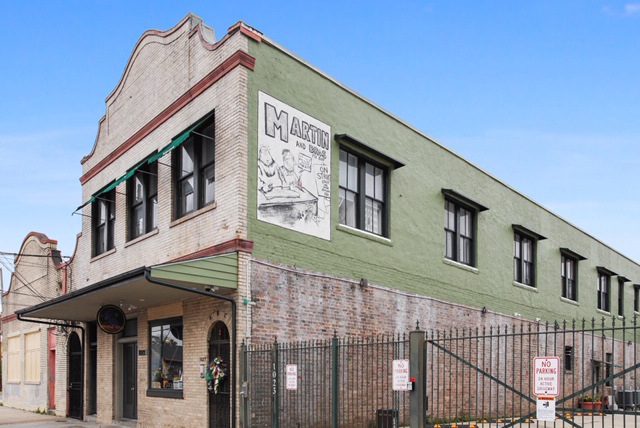
Bennie and Clovis Martin left their Raceland, Louisiana, home in the Acadiana region in the mid-1910s for New Orleans. Both worked as streetcar conductors until they opened Martin Brothers' Coffee Stand and Restaurant in the French Market in 1922. The years they had spent working as streetcar operators and members of the street railway employees' union would eventually lead to their hole-in-the-wall coffee stand becoming the birthplace of the poor boy sandwich.
Following increasingly heated contract negotiations, the streetcar motormen and conductors struck beginning July 1, 1929. The survival of the carmen's union and 1,100 jobs was in question. Transit strikes throughout the nation provoked emotional displays of public support, and the 1929 strike ranks among the nation's most violent.
When the company attempted to run the cars on July 5 using "strike breakers" (career criminals brought in from New York) brickbats and jeering crowds stopped them. More than 10,000 New Orleanians gathered downtown and watched strike supporters disable and then burn the first car operated by a strike breaker.
A highly sympathetic public participated in greatest numbers by avoiding the transit system, which remained shut down for two weeks. Former New Orleans Fire Department Superintendent William Mc Crossen experienced the strike as a teenager: "Dare not—nobody, nobody would ride the streetcars. Number one, they were for the carmen. Number two, there was a danger [in riding the cars]." Brickbats greeted the few streetcars that ran. Small and large businesses donated goods and services to the union local.
The many support letters included one from the Martin Brothers promising, "Our meal is free to any members of Division 194." Their letter concluded: "We are with you till h--l freezes, and when it does, we will furnish blankets to keep you warm." Martin Brothers Letter courtesy of Louisiana Research Collection, Tulane University Libraries.
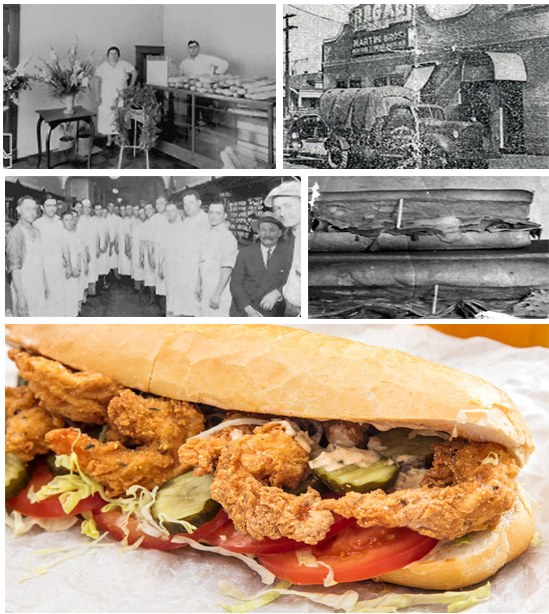
In order to maintain their promise, the Martins provided large sandwiches to the strikers. Bennie Martin said, "We fed those men free of charge until the strike ended. Whenever we saw one of the striking men coming, one of us would say, 'Here comes another poor boy.'" The traditional French bread's narrowed ends meant that much of each loaf was wasted, so the Martins worked with baker John Gendusa to develop a 40-inch loaf of bread that retained its uniform, rectangular shape from end to end. This innovation allowed for half-loaf sandwiches 20 inches in length as well as a 15-inch standard and smaller ones. The original poor boy sandwiches offered the same fillings as had been served on French bread loaves before the strike, but the size was startlingly new. By the start of the Great Depression, the carmen had lost the strike and their jobs. The continuing generosity of the Martins as well as the size of the sandwiches proved to be a wise business decision that earned them renown and hundreds of new customers. In 1931, the restaurant relocated to the 2000 block of St. Claude Avenue—just two blocks from Gendusa Bakery. A couple of years later they expanded their building into a much larger restaurant with an attached billiards hall. As the Depression worsened, many New Orleanians enjoyed the opportunity to feed themselves or their families using the famously oversized poor boy sandwiches. Clovis and Bennie parted ways by the late 1930s. Bennie held onto the St. Claude location, and Clovis developed several other restaurants throughout the city known as Martin and Son Poor Boy Bar and Restaurant. Their locations on Gentilly and Airline Highways lasted the longest. Clovis died in 1955, and Martin Brother's St. Claude restaurant survived into the 1970s. By then the sandwich name had spread far beyond New Orleans.
The bread has a story in itself. The Martin brothers at first were using a more traditional-style French baguette to make the sandwich, but because of the tipped ends on the bread, a lot of it was wasted. Gendusa, who owned a bakery just down the block on Touro Street, solved this problem by developing a more elongated tube-like French loaf that had rounded ends making the entire loaf eatable.
Quick Facts
■The Gendusa inspired loaf measured 40 inches and allowed for half-loaf sandwiches or the standard 15-inch Po-Boy
■Between 900 and 1,100 leaves of bread were used every 24 hours as the Martin Bros. Poor Boy was open 24 hours a day
■In 1929, you could purchase a Po-Boy for 15 cents; roast beef was the most common filling
■Bennie Martin reported that on one Carnival Day, over 3000 loaves of bread were used
Po' Boy (Poor-Boy) Sandwich
Also know as Oyster Loaves. Po' Boy is the generic name for the standard New Orleans sandwich made with French bread. They are considered a New Orleans institution. Also called poor boy. Always made with French bread, Po' boys can be filled with fried oysters, shrimp, fish, soft-shelled crabs, crawfish, roast beef and gravy, roast pork, meatballs, smoked sausage and more. They are served either "dressed" with a full range of condiments (usually mayonnaise, lettuce, and tomatoes) or "undressed" (plain). This sandwich is purely American in its variety of sauces and condiments. It is uniquely New Orleans because the oysters are local, as is the crisp and airy bread.
A predecessor was the Peacemaker Sandwich (La Mediatrice), a loaf of French bread, split and buttered and filled with fried oysters. The poetic name derives from the fact that 19th-century husbands, coming in late from a carouse or spree, would carry one home to cushion a possible rough reception from the lady of the house.
1838 - The first recorded American recipe for Oyster Loaves was in Mrs. Mary Randolph’s cookbook called The Virginia Housewife or Methodical Cook. This cookbook is considered the first truly American cookbook and the first regional American cookbook:
To Make Oyster Loaves - Take little round loaves, cut off the top, scrape out all the crumbs, then out the oysters into a stew pan with the crumbs that came out of the loaves, a little water, and a good lump of butter; stew them together ten or fifteen minutes, then put in a spoonful of good cream, fill your loaves, lay the bit of crust carefully on again, set them in the oven to crisp. Three are enough for a side dish.